From daily practices to food safety systems: HACCP, standards, and safe work
Written by: Rachel Krubsack
Date Posted: 12/01/2026
A single unchecked thermometer or skipped sanitation step might seem minor during a busy shift. But in food processing, everyday habits are your front line of defense against recalls, foodborne illnesses, and audit failures.
Here is how daily floor practices connect directly to global standards like HACCP, BRCGS, and SQF — and how to keep your team audit-ready every day.
How daily habits power safety systems
A food safety management system is only as reliable as its floor execution:
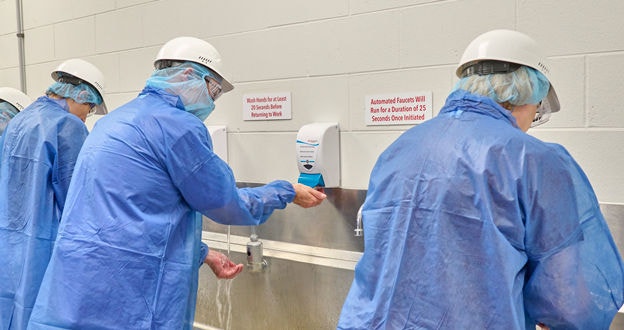
- Hygiene and sanitation: Proper handwashing prevents pathogen contamination in ready-to-eat zones.
- Temperature monitoring: Frequent logs protect Critical Control Points (CCPs) to halt bacterial growth.
- Allergen and storage control: Accurate labeling ensures total lot traceability and prevents cross-contact.
- Immediate reporting: Catching small errors early keeps non-compliant product from leaving the facility.
How BRCGS and SQF matter operationally
Global Food Safety Initiative (GFSI) schemes like Brand Reputation through Compliance Global Standards (BRCGS) and Safe Quality Food (SQF) provide a framework for daily processing excellence:
- Standardized standard operating procedures (SOPs): Ensure consistent execution across every shift.
- Continuous improvement: Uses root cause analysis to solve operational issues permanently.
- Proactive risk reduction: Prevents product holds, reworks, and brand damage.
- Market access: Proves compliance with major retail buyers and regulations.
How HACCP drives hazard control
Hazard Analysis and Critical Control Point (HACCP) acts as the engine that identifies and controls biological, chemical, and physical hazards across seven principles:
- Hazard analysis: Identify potential risks at every process step.
- Determine CCPs: Pinpoint controls needed to eliminate or reduce hazards.
- Establish critical limits: Define target parameters (e.g., core temperature, metal detection limits).
- Monitor CCPs: Track performance with regular floor checks.
- Corrective actions: Execute preplanned fixes immediately if parameters drift.
- Verification: Confirm effectiveness through testing and record audits.
- Documentation: Keep accurate records to demonstrate compliance.
Conclusion
True audit readiness is never built overnight; it is sustained when floor teams recognize that their daily routines directly uphold HACCP critical limits and GFSI standards. By connecting routine employee training to broader food safety system goals, operations can transform basic compliance into an everyday culture of hazard prevention, operational excellence, and continuous audit readiness.
Get Online Food Safety Training
When your employees understand how their actions impact food safety, everyone benefits. J. J. Keller's food safety training helps food manufacturers, processors, distributors and related facilities equip employees with the knowledge and confidence to follow procedures, prevent contamination and support compliance efforts.
Why J. J. Keller® Training?

ROBUST ONLINE TRAINING LIBRARY
Access the industry’s largest online training library, consisting of 950+ unique E-Learning courses, 500+ customizable training resources, and more.

STREAMING VIDEO FOR ADDED IMPACT
Make the most of your classroom training sessions with 300+ hi-res training videos developed by adult learning specialists.

EASY ACCESS ANYTIME, ANYWHERE
Enjoy maximum flexibility with 24/7 access to hundreds of titles through our mobile-friendly site, plus a free app for learners to train on the go.

EXPERT CONTENT YOU CAN TRUST
Backed by 70 years of industry experience, our courses center on actionable learning objectives and receive regular updates from our in-house experts to reflect the latest regulatory changes.

FREE RECORDKEEPING AND REPORTING
Easily track which employees have been trained on which topics and when, and identify any lapses in your training program – at no added cost.

INVALUABLE MANAGEMENT RESOURCES
As an administrator, you’ll gain exclusive access to the J. J. Keller® Reference Hub, where you can reference word-for-word regulations, ask our experts specific compliance questions, and more.